Custom Padded Mailers for Industrial Equipment Shipping
Custom Padded Mailers: The Unsung Hero in Industrial Packaging
Having spent years knee-deep in the industrial equipment sector, I’ve come to appreciate the quiet reliability of certain packaging solutions—especially custom padded mailers. You might not think much about them, but these mailers play a surprisingly vital role in protecting sensitive equipment and components during shipping. Frankly, they’re often the difference between a happy customer and a costly return.
Over time, I’ve seen how raw design and material choices in padded mailers have evolved. Gone are the days when you’d slap bubble wrap around a box and call it a day. Today, it’s about precision – matching cushioning thickness, strength, and even environmental impact to the exact needs of high-value industrial parts.
For example, one of the most common issues we tackled was ensuring enough impact absorption without adding too much bulk. Excess size raises shipping costs, but insufficient padding leads to damaged goods. It’s a delicate balance, you know. Custom padded mailers let us tailor thickness, inner lining, and outer shell to the precise size and fragility of our components.
Oddly enough, the materials used have come a long way too. Most manufacturers now lean on recyclable kraft paper combined with modern foam or air-cushion inserts instead of the old plastic bubble wrap. This feels more aligned with current environmental sensibilities while maintaining top-notch protection. I recall a client, a precision instrumentation firm, who switched to custom padded mailers and noted a 35% drop in damaged shipments within the first quarter—pretty tangible proof of value.
Of course, testing these mailers isn’t just about dropping boxes off loading docks. Many engineers I know swear by vibration testing and real-world shipping trials, simulating everything from courier sorting to temperature swings. It matters because real-world conditions are rarely as predictable as lab environments.
Let’s lay out some typical specs you’d want to weigh when considering a custom padded mailer. Straight from my folder of industry insights:
| Spec | Details |
|---|---|
| Outer Material | Recyclable Kraft Paper or Polyethylene |
| Padding Type | Foam, Air Bubble, or Paper-based cushioning |
| Thickness | 3mm to 15mm, customizable |
| Closure | Self-adhesive strip or heat-seal option |
| Environmental | Recyclable, biodegradable options available |
| Typical Sizes | Custom dimensions tailored to product |
When comparing vendors, it really boils down to three main things: customization capability, material quality, and delivery reliability. I’ve bookmarked a quick comparison from recent industry interactions:
| Vendor | Customization Options | Material Quality | Lead Time | Sustainability |
|---|---|---|---|---|
| LiyabioBag | Highly flexible, tailored designs | Premium kraft and foam composites | 2-3 weeks typical | Recyclable & biodegradable |
| Vendor B | Standard sizes, limited custom work | Mid-grade polyethylene | 1 week | Limited recycling programs |
| Vendor C | Custom shapes, but MOQ applies | Basic foam padding | 3-4 weeks | No specific eco-certifications |
From my personal dealings, I’ve found that working with a vendor who understands your product’s quirks—as custom padded mailers suppliers often do—is worth the extra time and sometimes premium. It avoids chaos down the line. And trust me, in industrial logistics, it’s the small details that prevent big headaches.
So, if you’re considering an upgrade in your shipping strategy or simply hunting for that next-level packaging solution, thinking custom might be the way to go. It’s not just cushioning; it’s about protecting your reputation in every shipment.
In real terms, custom padded mailers have quietly revolutionized how we think about packaging fragile, expensive gear. I suppose it’s a bit like the difference between throwing your tools in a cardboard box and having a custom toolbox designed just for them. You get peace of mind.
Here’s my brief takeaway: never underestimate the power of good packaging. It pays for itself in saved replacements and happy customers.
References:
- Industry packaging trends report, 2023
- Client feedback from precision instruments manufacturer, 2022
- Material sustainability review, Eco Packaging Monthly, 2023
-
Secure Shipping Guide with Poly Mailer Bubble Wrap SolutionsNewsApr.16,2026
-
Secure Shipping Guide for Using Durable Bubble Parcel BagsNewsApr.09,2026
-
Comprehensive Guide to Poly Mailer Bubble for Secure and Efficient ShippingNewsApr.07,2026
-
Elevate Your Brand with Custom Designer Bubble Mailers for Effective PackagingNewsApr.04,2026
-
Comprehensive Guide to Poly Mailers with Bubble Wrap for Secure ShippingNewsMar.31,2026
-
Comprehensive Guide to Large Bubble Poly Mailers for Secure and Efficient ShippingNewsMar.28,2026
-
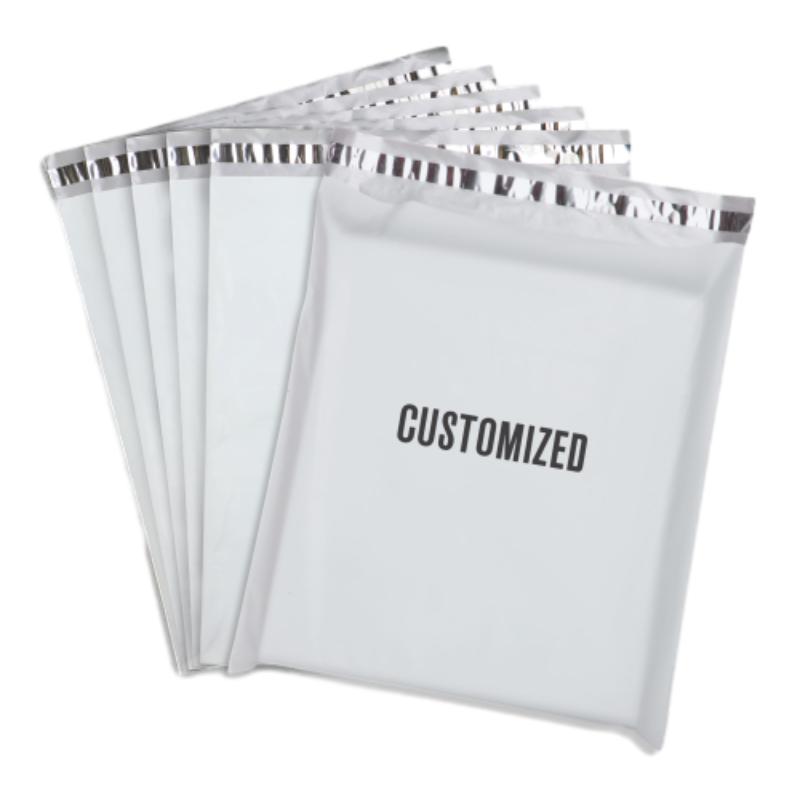
Have the freedom of customizing your custom mailers any way you want! Our dedicated packaging support will help deliver you the mailing experience you need to elevate your shipping experience to the next level! Start making a strong impression on your customers and stand out from your competitors! -
LIYA uses high quality raw materials which directly purchased from large enterprises domestic and overseas such as PetroChina, Sinopec, Sabic, Equate, ExxonMobil, Dow Chemical, Total, and Borouge, ensuring the price advantage and quality of the raw materials. -
LIYA uses high quality raw materials which directly purchased from large enterprises domestic and overseas such as PetroChina, Sinopec, Sabic, Equate, ExxonMobil, Dow Chemical, Total, and Borouge, ensuring the price advantage and quality of the raw materials.
 English
  Arabic
  China
China  French
  Korean
  Russian
  Spanish