Laminated Poly Bags — Durable, Waterproof, Custom Print
If you’ve ever packed grapes at dawn or shipped nuts across two climate zones, you know packaging can make or break a product’s freshness. That’s why I’m paying attention to laminated poly bags from Plastic Packing Park, Xiongxian, Baoding, Hebei, China (071800). The factory folks there are pragmatic: they build for fruit, daily necessities, snacks—real-world stuff, not brochure fantasy. And, to be honest, the last two seasons have been all about consistent seal integrity and practical venting, not flashy buzzwords.
What’s inside the laminate (and why it matters)
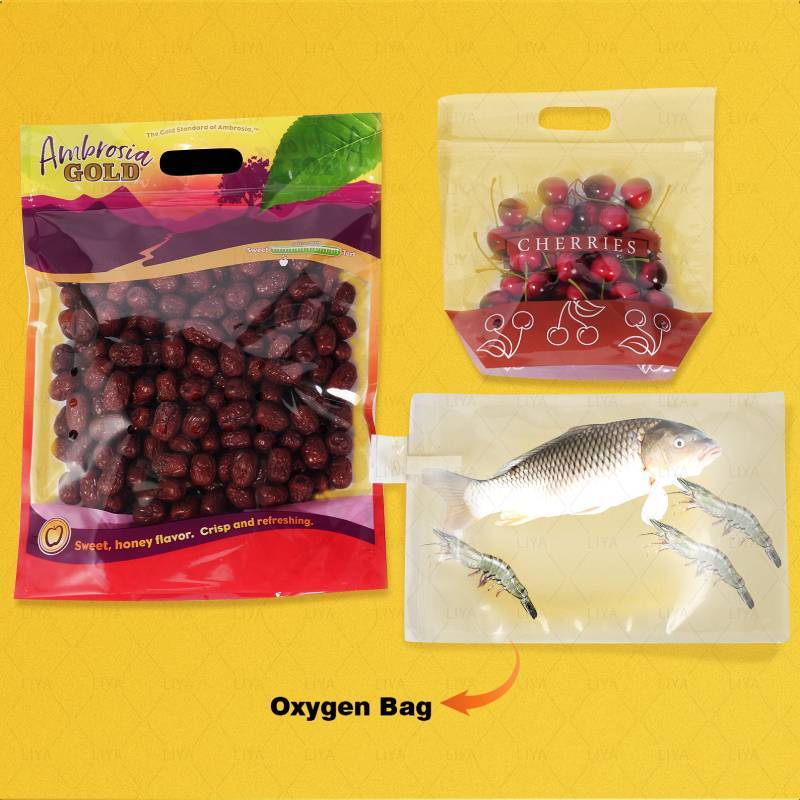
Typical structures: PET/PE for clarity and toughness; BOPP/CPP when you need that glossy “pop”; and PA/PE for puncture resistance (think cherries’ stems). Metallized or EVOH-barrier options show up when aroma or oxygen control becomes critical. Add anti-fog and—surprisingly—you can display crisp produce without that annoying misting. Many customers say the self-sealing zippers with die-cut handles are the “don’t-think-about-it” feature that keeps repeat buyers coming.
Product specs at a glance
| Name | Laminated Bag (fruit, food, grains, dry goods) |
| Common structures | PET/PE, BOPP/CPP, PA/PE; optional EVOH or metallized layer |
| Thickness | ≈ 60–150 μm (real-world use may vary by product) |
| Closures | Zip lock, self-seal; optional die-cut handle, laser score, vent holes |
| Barrier | OTR ≈ 1–150 cc/m²·day; WVTR ≈ 0.5–8 g/m²·day (depends on laminate) |
| Seal strength | ≥ 2.5 N/15 mm (ASTM F88) |
| Food contact | Complies with FDA 21 CFR, EU 10/2011 (migration tested by third parties) |
How they’re made (short version)
- Materials: PE, PP, PET, PA films; inks and solventless PU adhesives.
- Methods: corona treatment → gravure printing (up to 10 colors) → dry/solventless lamination → 24–48 h curing → slitting → pouch-making (zip, handle, vents).
- Testing: ASTM D882 (tensile), D3985 (OTR), F1249 (WVTR), F88 (seal), F2054 (burst), ISTA drop tests.
- Service life: ≈ 12–18 months in cool, dry storage; check barrier SKUs for longer.
- Industries: fresh produce (grapes, cherries), snacks, nuts, grains, pet treats, daily necessities.
Trends I’m seeing: mono-material PE/PE for easier recycling, solventless lamination to reduce VOCs, and modest PCR content pilots. Retailers are nudging suppliers—quietly but firmly—toward clearer labeling and verified migration tests.
Vendor snapshot (field-notes style)
| Vendor | MOQ | Lead Time | Certs | Notes |
|---|---|---|---|---|
| Liyabiobag (Hebei) | ≈ 10,000 | 10–15 days | ISO 9001, ISO 22000; SGS tests | Clean print, consistent seals; flexible on custom vents. |
| Importer M | ≈ 50,000 | 30–45 days | Varies | Good price at volume; slower artwork cycles. |
| Local Converter S | ≈ 5,000 | 7–10 days | GMP, HACCP | Fast reorders; higher unit cost, great for pilots. |
Data are indicative; real-world use may vary by project and seasonality.
Use-cases and field feedback
For cherries, a PA/PE with micro-vents kept stems greener for around 36 hours longer in transit, according to one Hebei co-op. A nut roaster told me their aroma retention improved after switching to a PET/EVOH/PE structure—actually, customer reviews ticked up because the “first-open” scent was stronger.
Customization is where laminated poly bags shine: gusseted bottoms for shelf presence, zip widths tuned for repeated access, and laser scoring for that clean tear (no scissors in the packhouse, I guess).

Testing and compliance (the non-negotiables)
- Oxygen and moisture: ASTM D3985 and F1249
- Seal/burst: ASTM F88 and F2054
- Food safety: FDA 21 CFR; EU 10/2011 overall/specific migration; ISO 22000 systems
Bottom line: pick an evidence-backed spec, validate with your product, then scale. That’s where laminated poly bags stop being a commodity and start being a moat.
Quick process checklist
- Define shelf-life target and venting need (produce vs. dry goods).
- Select laminate and thickness; request OTR/WVTR data with conditions.
- Run pilot with ASTM/ISTA tests; verify migration reports.
- Lock artwork, zipper type, and handle; confirm cure time before packing.
Authoritative citations:
- ASTM F88/F88M – Standard Test Method for Seal Strength of Flexible Barrier Materials.
- ASTM D3985 – Standard Test Method for Oxygen Gas Transmission Rate Through Plastic Film.
- ASTM F1249 – Standard Test Method for Water Vapor Transmission Rate Through Plastic Film.
- EU Regulation No. 10/2011 on plastic materials intended to come into contact with food.
- FDA 21 CFR 177.1520 (Olefin polymers) and related food-contact provisions.
- ISO 22000:2018 – Food safety management systems.
-
Secure Shipping Guide with Poly Mailer Bubble Wrap SolutionsNewsApr.16,2026
-
Secure Shipping Guide for Using Durable Bubble Parcel BagsNewsApr.09,2026
-
Comprehensive Guide to Poly Mailer Bubble for Secure and Efficient ShippingNewsApr.07,2026
-
Elevate Your Brand with Custom Designer Bubble Mailers for Effective PackagingNewsApr.04,2026
-
Comprehensive Guide to Poly Mailers with Bubble Wrap for Secure ShippingNewsMar.31,2026
-
Comprehensive Guide to Large Bubble Poly Mailers for Secure and Efficient ShippingNewsMar.28,2026
-
Have the freedom of customizing your custom mailers any way you want! Our dedicated packaging support will help deliver you the mailing experience you need to elevate your shipping experience to the next level! Start making a strong impression on your customers and stand out from your competitors! -
LIYA uses high quality raw materials which directly purchased from large enterprises domestic and overseas such as PetroChina, Sinopec, Sabic, Equate, ExxonMobil, Dow Chemical, Total, and Borouge, ensuring the price advantage and quality of the raw materials. -
LIYA uses high quality raw materials which directly purchased from large enterprises domestic and overseas such as PetroChina, Sinopec, Sabic, Equate, ExxonMobil, Dow Chemical, Total, and Borouge, ensuring the price advantage and quality of the raw materials.
 English
  Arabic
  China
China  French
  Korean
  Russian
  Spanish